djust 1.2: More Django-Compatible, Much Faster
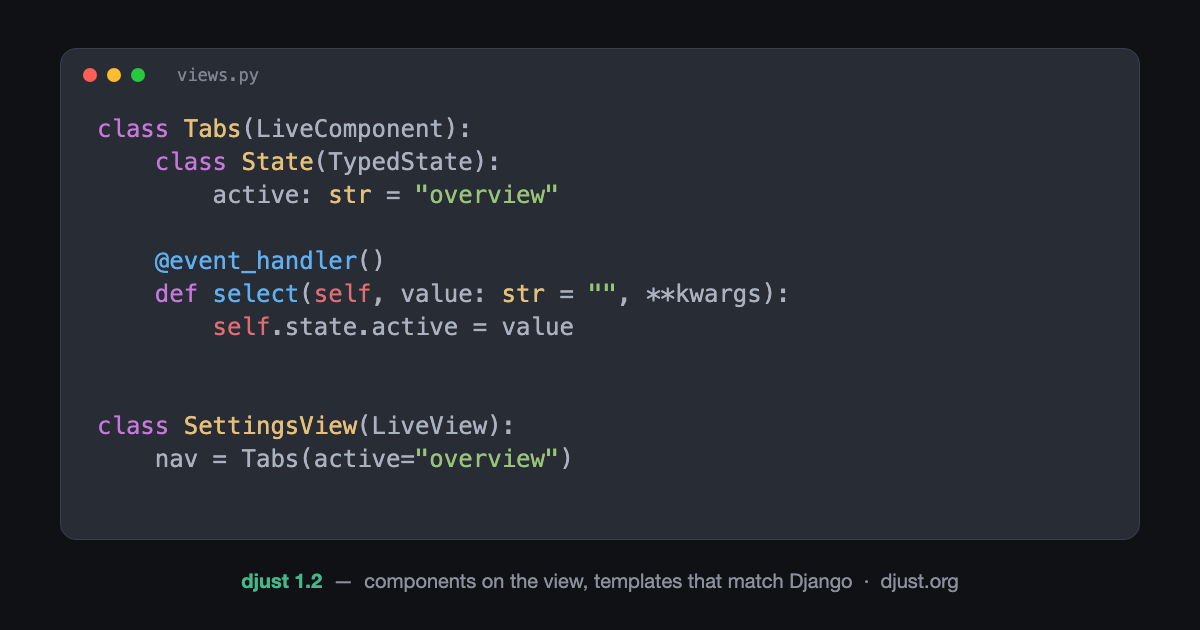
djust 1.2 passes 98.6% of Django's own template test suite, renders loop-heavy templates up to 45x faster than earlier releases, and adds class-level components, djust init and component-level testing.
Tutorials, updates, and best practices for building reactive Django apps.
Subscribe via RSS
djust is a Django framework for building reactive, real-time applications in pure Python — powered by a Rust VDOM engine with 30x faster rendering than Django templates. No JavaScript framework required.

djust v0.1.6 brings major template system improvements including {% url %} tag support, {% include %} fixes, comparison operators in {% if %} conditions, and automatic Django type serialization.

djust 0.1.6 introduces AST optimization for 5-15% faster rendering, lazy hydration for 20-40% memory reduction, TurboNav integration, and improved whitespace preservation.

djust now includes built-in security utilities, automated vulnerability scanning, and pre-commit hooks to help you build secure applications from day one. Here's what's new in PR #40.

We are excited to announce djust, a framework that brings Phoenix LiveView-style reactive server-side rendering to Django. Build real-time, interactive web applications with Python - no JavaScript required.

Learn how to use djust's powerful decorators like @debounce, @optimistic, @cache, and @client_state to build responsive, performant applications.

A deep dive into djust's hybrid Python/Rust architecture and how the Rust-powered virtual DOM engine delivers exceptional performance.

A step-by-step guide to creating interactive, real-time components in Django using djust. No JavaScript required.

Already have a Django project? Learn how to incrementally adopt djust to add real-time features without rewriting your entire application.